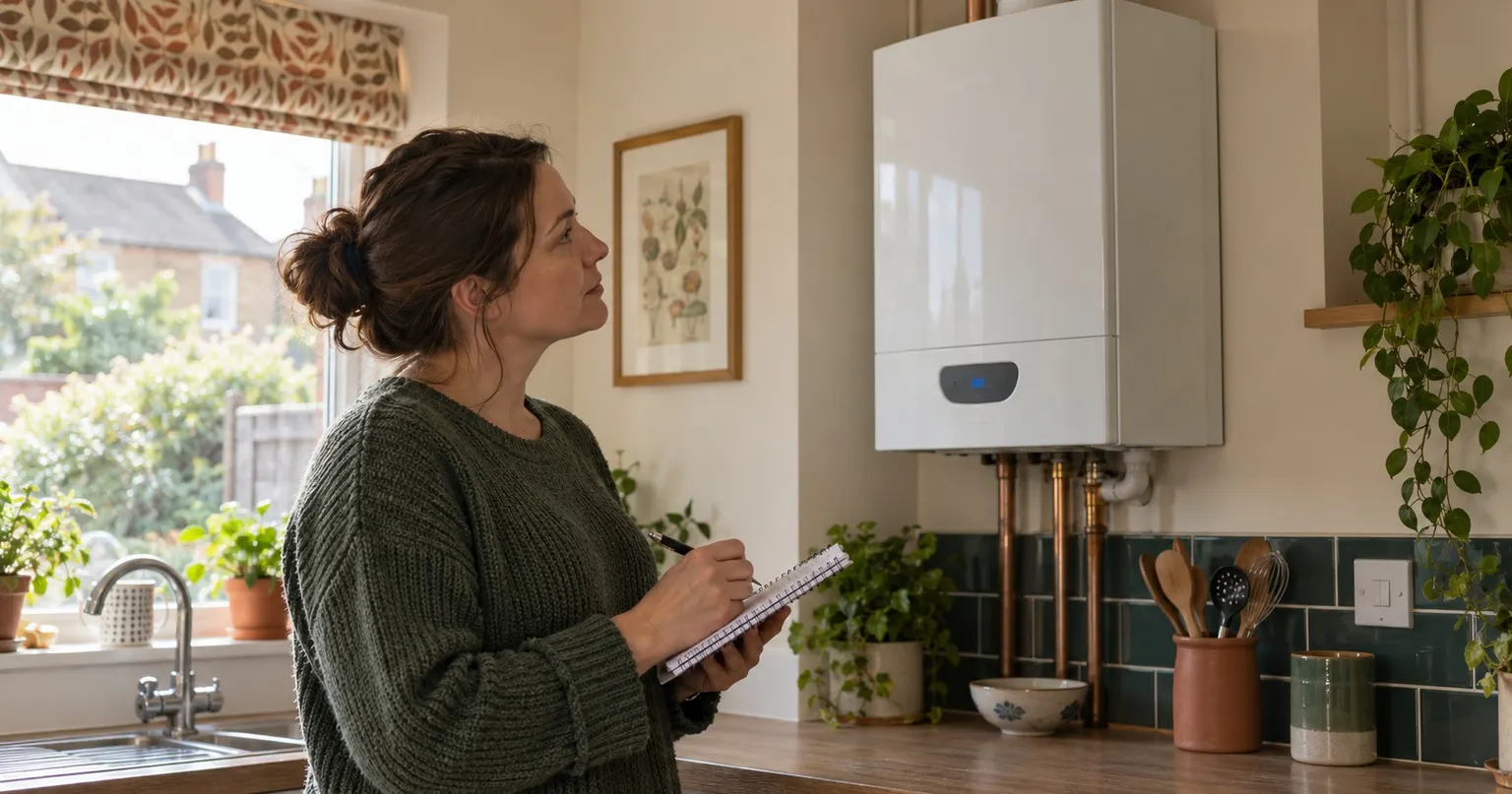
No heating or hot water can turn an ordinary day into a difficult one, especially in colder weather or when someone at home is more affected by the cold. If you are in Bexley and the boiler or heating has stopped working, the useful first step is not to guess at the fault. Check whether there is an emergency, then note the few things you can safely observe and use them to explain what is happening.
Is this an emergency?
If you smell gas, suspect a gas leak or carbon monoxide, or a carbon-monoxide alarm sounds, do not continue with an online heating enquiry. Call the National Gas Emergency Service immediately on 0800 111 999. National Gas says the number is free and available 24 hours a day.
Carbon monoxide cannot be seen or smelled. The NHS guidance on carbon-monoxide poisoning lists symptoms including headache, dizziness, sickness, weakness, tiredness or confusion, chest or muscle pain, and shortness of breath. Go outside and seek medical advice if poisoning may be involved. Use NHS 111 for possible symptoms; call 999 or go to A&E for severe symptoms such as difficulty breathing, sudden confusion or loss of consciousness.
If you do not notice a smell, alarm or symptom, that does not prove the situation is safe. If you are unsure or anything changes, use the official emergency guidance rather than relying on an online enquiry.
What can I safely observe or record?
When there is no sign of a gas or carbon-monoxide emergency, look only at what is already visible. You do not need a diagnosis before asking for heating help.
Useful observations include:
- whether the heating, hot water or both have stopped;
- when you first noticed the problem and whether it comes and goes;
- whether one radiator, several rooms or the whole property is affected;
- any fault code, warning light or pressure reading already visible on the display;
- unusual noises or water that you can see from a safe distance; and
- whether the issue followed a power cut or another event you clearly remember.
Copy a displayed code exactly rather than trying to interpret it. If a reading is not already visible, leave it alone. A simple description such as “The hot water stopped this morning, and the heating went off again at about 2pm” is more useful than a guessed technical cause.
What information helps when seeking heating help?
Alongside the immediate symptoms, a few practical details can make the situation easier to understand:
- your Bexley postcode and whether the property is a house or flat;
- the boiler make, if it is plainly visible;
- whether there is a hot-water cylinder, if you already know;
- whether you are the homeowner, resident, landlord or managing agent;
- the best way and time to contact you; and
- any access constraint that matters.
Say if a baby, older person, disabled person or someone with a health condition may be particularly affected by the loss of heating or hot water. Only share the minimum detail needed to explain the urgency; you do not need to provide a medical history.
A natural description might be:
We have had no heating or hot water since early this morning. The boiler is showing code E1 and the display reads 0.7 bar. There is an older person at the property in Bexleyheath, and phone is the best way to reach me this afternoon.
Use your own words and include only what you actually know. Not mentioning a smell, alarm or other warning sign should never be read as confirmation that the situation is safe.
What should I avoid doing?
Do not remove the boiler cover, open equipment or try to repair the system yourself. Avoid repeated resets or changing settings simply to gather more information. Do not guess what a fault code means.
If gas work is needed, the business or engineer carrying it out should be appropriately registered and qualified for that work. The Health and Safety Executive explains how to check a business or engineer through the Gas Safe Register.
Keep passwords, alarm codes, payment-card details and other unnecessary sensitive information out of your enquiry.
Getting heating help in Bexley
Heating problems can affect homes across the London Borough of Bexley, but the useful information is usually the same: what has stopped working, when it started, what you can already see and how the problem is affecting the household.
Heating Bexley gives local homeowners, residents, landlords and managing agents one place to share those details. You do not need to complete a technical checklist or decide what repair is required first. If this is not a suspected gas or carbon-monoxide emergency, share what you already know in a Heating Bexley enquiry.
What happens after a Heating Bexley enquiry?
Heating Bexley records and assesses local heating enquiries. It does not diagnose faults or carry out heating work. If a suitable provider is available, Heating Bexley may be able to make a transparent connection with your consent.
Submitting an enquiry does not guarantee a response time, visit, quotation or job acceptance. It does give you a clear local route for sharing the facts you already have, without pretending to know the cause.
The journey has two clear paths: suspected gas or carbon monoxide goes to the official emergency route; otherwise, the next step is to share your heating enquiry.