Boiler Losing Pressure in Bexley: What to Include in Your Enquiry
If your boiler appears to be losing pressure, you do not need to diagnose the cause before asking for help. The useful first step is to record the reading you can already see, whether it has dropped more than once, and whether your heating, hot water or both are affected.
Do not open the boiler or change controls simply to gather more information. Pressure displays, expected ranges and controls differ between appliances, so use your own boiler manual for model-specific information.
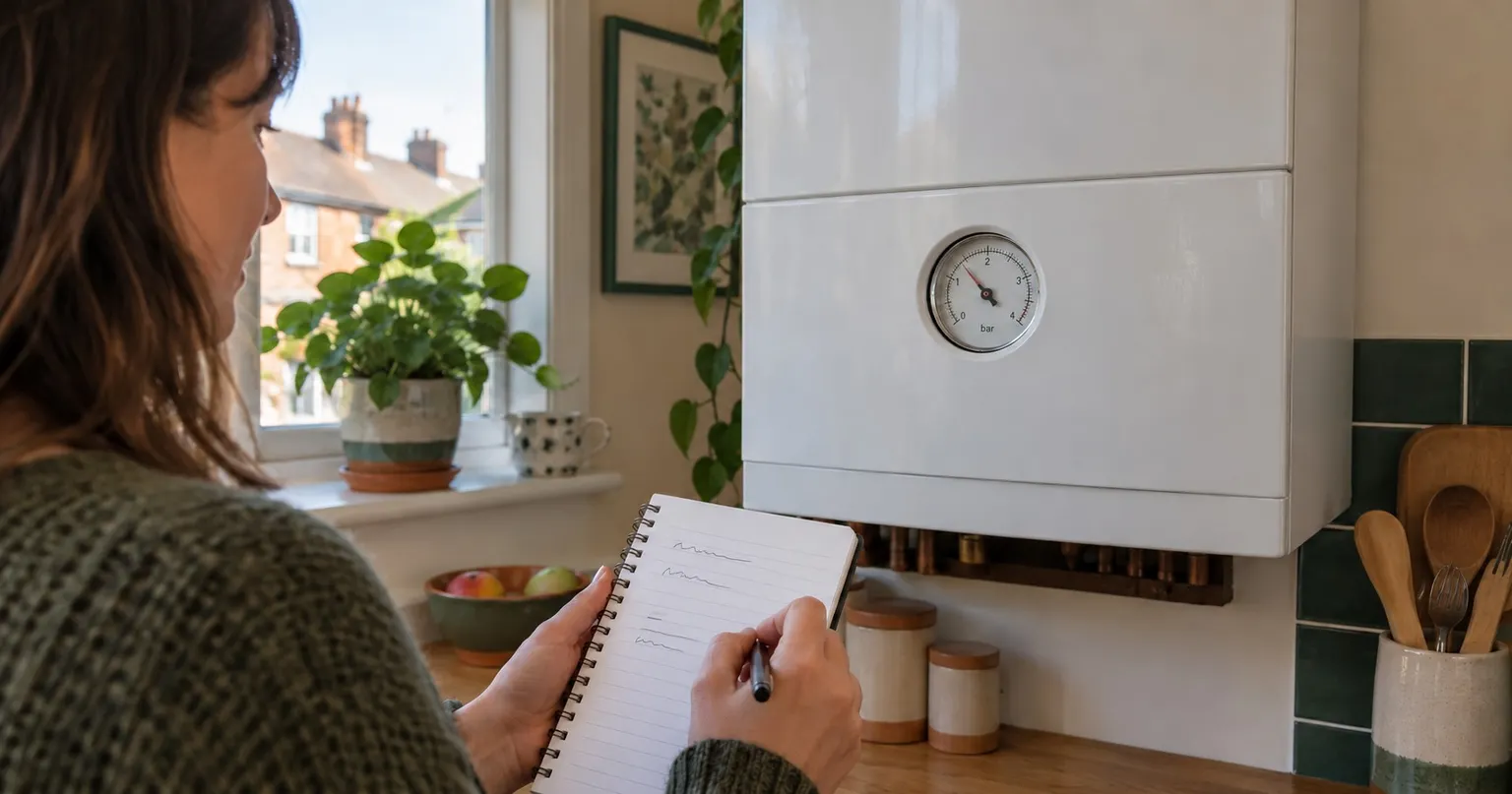
What should I record from the boiler display?
Write down exactly what is already visible. That may include:
- the pressure reading shown now;
- whether it appears on a physical gauge or a digital display;
- any fault code or warning light, copied exactly; and
- the boiler make and model, if these are plainly visible without moving or opening anything.
Avoid interpreting the reading or code in your enquiry. A precise note such as “The display showed 0.8 bar this morning and code E1” is more useful than guessing which part has failed.
Your appliance manual is the right place to check what a reading or code means for that particular model. There is no need to follow generic online pressure-setting instructions before making an enquiry.
Has the pressure dropped once or repeatedly?
Timing and recurrence can make your description clearer. Note:
- when you first noticed the change;
- whether the reading dropped once or has fallen again after returning to a different level;
- how quickly the change appeared to happen;
- whether you remember a power cut, service visit or another event before it began; and
- whether the issue is constant or comes and goes.
Only record what you have observed. A falling reading can have more than one explanation, so recurrence does not establish a cause.
Are heating or hot water affected?
Say whether the issue affects:
- the heating;
- the hot water;
- both; or
- neither at the moment.
If one radiator is affected but the rest of the heating is working, include that detail. If the whole property is affected, say so. These facts help describe the scope of the problem without turning your enquiry into a diagnosis.
If you have no heating or hot water, the guide No Heating or Hot Water in Bexley? What to Do Next explains the emergency boundary and the other safe details worth noting.
Is there any visible water or dampness?
From a safe distance, note any water, damp patch, staining or discolouration you can already see around the boiler, radiators or accessible pipe connections. Do not remove covers, tighten fittings, move equipment or test for a leak.
Not seeing water does not rule out a problem, and seeing a damp mark does not identify its cause. Describe the location and appearance without drawing a conclusion.
What should I avoid doing for the sake of an enquiry?
You do not need to make the boiler fail again or try to restore the pressure before asking for help. In particular:
- do not remove the boiler casing;
- do not dismantle or tighten parts;
- do not repeatedly reset the boiler;
- do not bleed radiators or manipulate filling controls merely to collect information; and
- do not copy a pressure target or repair procedure from guidance for a different appliance.
If regulated gas work is needed, use the official Health and Safety Executive guidance for checking a business or engineer through the Gas Safe Register. Heating Bexley does not claim that it, or any future provider, holds a particular registration or qualification.
What should I include in a Heating Bexley enquiry?
When you are ready, include the useful facts you already know:
- the current reading and whether the display is physical or digital;
- whether the pressure has dropped once or repeatedly;
- whether heating, hot water or both are affected;
- any exact fault code or warning light;
- any visible water or dampness observed from a safe distance;
- when the problem began;
- the boiler make and model, if plainly visible;
- your property type, Bexley postcode and heating-system details you already know; and
- your preferred contact method, contact details and consent choice.
You can write this in ordinary language. For example:
The boiler display showed 0.8 bar this morning. It was higher yesterday, and the pressure has dropped twice this week. The heating is not coming on, but the hot water is still working. There is no water visible from where I can safely look. The display shows code E1.
Use only the details that are true for your situation. Do not treat the example as a technical checklist or as evidence that an absent warning sign makes the appliance safe.
When should I use the emergency route instead?
If you smell gas, suspect a gas leak or carbon-monoxide emergency, or a carbon-monoxide alarm sounds, do not use the Heating Bexley form. Call the National Gas Emergency Service immediately on 0800 111 999. National Gas states that the number is free and available 24 hours a day.
Share your boiler problem
If this is not a suspected gas or carbon-monoxide emergency, share the facts you already know through the Heating Bexley boiler-repair enquiry. You do not need to identify the cause or choose a repair first.
Heating Bexley records and assesses local heating enquiries. It is an enquiry-and-connection service, not the contractor, and no provider is currently appointed or represented. If a suitable provider is available, Heating Bexley may be able to make a transparent connection with your consent.
Submitting an enquiry does not guarantee a response, quotation, acceptance, attendance or provider availability.